9 Criteria for Comparing CNC Machining Services
Written by Dynamics Group, an ITAR-registered Michigan design-build manufacturer. See author credentials for facility, quality, and inspection evidence.
Key Takeaways: 9 Criteria for Comparing CNC Machining Services
- Tolerance capability and in-house verification equipment determine whether a supplier can hold your critical features consistently.
- Prototype-to-production continuity reduces schedule risk when the same shop carries your part through every phase.
- Quality system documentation and certifications like ISO 9001 show process discipline that survives audits and repeat orders.
- Dynamics Group delivers single-source accountability with machining, fabrication, and inspection under one roof in Michigan.
- Direct communication with engineers shortens feedback loops and prevents costly misunderstandings on complex geometry.
9 Evaluation Criteria for Choosing a CNC Machining Partner
1. Tolerance Capability and Verification Equipment
Start by asking what tolerances the shop publishes and how they verify them. A supplier claiming ±0.0002 inches on critical features should have the CMM equipment to back that number up. If the inspection gear lives offsite, you inherit the lead time and data-handling risk that comes with third-party verification.
Look for coordinate measuring machines, probe CMMs, and 3D scanners operated by the same team that programs the mills and lathes. This setup keeps feedback loops tight and catches drift before parts ship.
2. Machine Fleet and Work Envelope
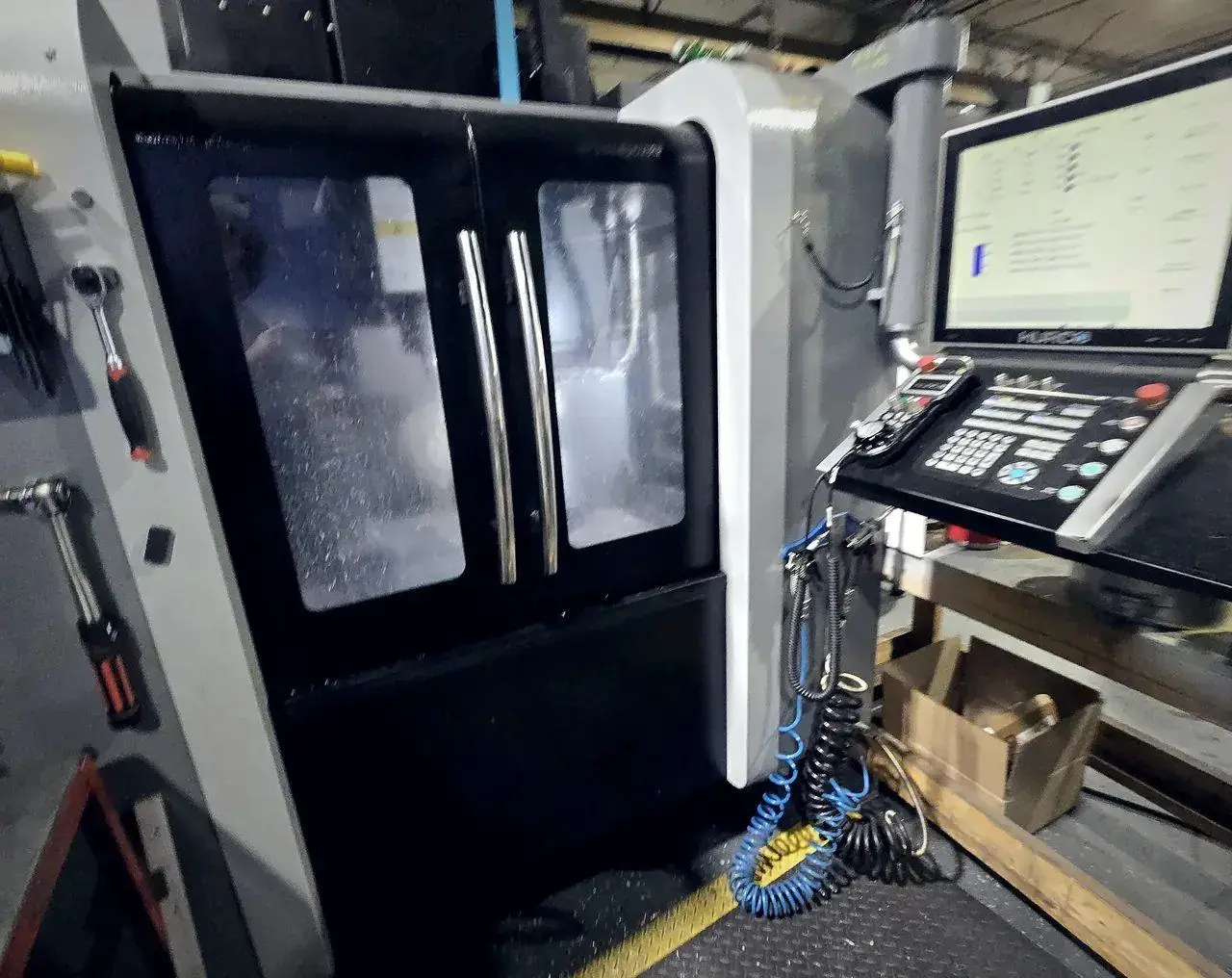
Ask for the equipment list before you send a model. A shop running six vertical machining centers with envelopes to 51 x 22 x 20 inches can handle a broader range of part sizes than one limited to benchtop mills.
Also confirm spindle speeds and axis configuration. If your geometry needs simultaneous 5-axis motion, a 3+2 setup will not cut it. 5-axis machining reduces setups and eliminates the tolerance stack-up that comes from re-clamping across multiple operations.
3. Material Experience
Machining aluminum is different from cutting titanium or stainless. Each material demands specific tooling, feeds, speeds, and coolant strategies. Ask which materials the shop runs regularly and request sample parts or references.
If your part calls for composites or carbon-fiber-reinforced plastics, verify that the supplier has routing and dust management equipment designed for those materials. Forcing a metal-focused shop to learn on your dime rarely ends well.
4. Prototype-to-Production Continuity
Some suppliers specialize in fast-turn prototypes; others focus on high-volume production. Few do both well. The risk of handing off your prototype to a second shop for production is real: new programmers, different machines, and fresh learning curves.
A supplier that carries your part from first article through recurring releases keeps the process knowledge in one place. Dynamics Group handles prototype and production machining on the same floor with the same quality system, which reduces schedule risk when your part moves from R&D to full-rate manufacturing.
5. Quality System and Certifications
Quality at a precision shop is a documented system. ISO 9001 certification signals that the supplier follows auditable processes for work instructions, inspection planning, and corrective action. For defense work, ITAR registration confirms controlled handling of technical data.
Ask how the shop documents first-article inspection, in-process checks, and final verification. If the answer is "we eyeball it," that is your cue to keep looking. Documented quality processes protect you when the fiftieth part needs to measure exactly like the first.
6. Lead Time and Quote Responsiveness
Speed matters at quoting as much as it does on the floor. A supplier returning quotes in 24 hours signals staffing depth and process maturity. If you wait a week for a price, expect similar delays when you have engineering questions mid-run.
Also ask about realistic lead times, not best-case estimates. A shop that commits to honest timelines and hits them is more valuable than one that overpromises and misses deadlines. Dynamics Group returns most quotes in 24 hours and gives straight answers on delivery dates up front.
7. Single-Source Accountability
Coordinating separate suppliers for design, machining, fabrication, and inspection multiplies your schedule risk. Every handoff introduces communication gaps and finger-pointing when something goes wrong.
A design-and-build manufacturer keeps all those functions under one roof, so the fix happens the same week the problem is found. This approach eliminates the commercial arguments that slow down projects split across multiple vendors.
8. Communication and Technical Depth
You should be able to talk directly to the people programming your parts. If every question routes through an account manager who relays messages to the floor, expect delays and misunderstandings on complex geometry.
Direct access to machinists and programmers shortens feedback loops. When a tolerance callout needs clarification or a feature needs DFM input, that conversation should happen in hours, not days. At Dynamics Group, customers talk to the same engineers and programmers who run their jobs.
9. Data Security and Controlled Handling
If your drawings contain controlled technical data, the shop must be equipped to handle it. ITAR registration is table stakes for defense-related work. Beyond registration, ask how the supplier restricts access, stores files, and documents data handling.
A shop that shares models with offshore suppliers to chase lower costs puts your IP at risk. Keeping machining in-house at a registered facility gives you audit-ready documentation and peace of mind that your data stays protected.
How to Build Your CNC Supplier Shortlist
Narrowing down CNC machining services to a shortlist starts with matching your part requirements to supplier capabilities. Map your tightest tolerances, most challenging materials, and volume expectations against each candidate's published specs and references.
Then test responsiveness. Send the same RFQ to your top three candidates and note how quickly each returns a quote and how many clarifying questions they ask. A supplier that asks smart questions up front is more likely to get your part right the first time.
Dynamics Group combines precision CNC machining, design, fabrication, and inspection at one Madison Heights, Michigan location. If you need tight tolerances, prototype support, and a clear path to production, request a quote and you'll have a response in 24 hours.
FAQs about 9 Criteria for Comparing CNC Machining Services
What tolerances should I expect from a precision CNC machining supplier?
Most precision shops hold ±0.001 inches on standard features. For critical dimensions, look for suppliers that publish ±0.0002-inch capability and verify it with in-house CMM equipment.
Always confirm whether the advertised tolerance applies to your specific geometry and material.
Why does prototype-to-production continuity matter?
When the same supplier carries your part from first article through full production, you avoid re-programming, new setups, and fresh learning curves. This continuity keeps process knowledge intact and reduces the schedule risk that comes with supplier handoffs.
How do I verify a supplier's quality system?
Request ISO 9001 certification documentation and ask for a tour or virtual walkthrough of their inspection process. A credible supplier can show you work instructions, inspection plans, and first-article reports for similar parts.
What questions should I ask about lead times?
Ask for realistic estimates, not best-case scenarios. Find out whether the supplier has capacity for your timeline and how they handle rush requests. Honest answers here save you from missed deadlines later.
How does single-source accountability reduce schedule risk?
Dynamics Group keeps design, machining, fabrication, and inspection in one building. When a problem surfaces at tryout, the fix happens the same week instead of cycling through change orders with separate vendors.
What data security measures should a CNC supplier have?
For defense work, ITAR registration is required. Beyond certification, ask how the supplier restricts file access, handles revisions, and documents data custody. Audit-ready procedures protect your IP and satisfy your customer's compliance requirements.