
Legacy and obsolete parts
Recreate components whose drawings, models or suppliers no longer exist.

Reverse engineering & 3D scanning
Dynamics Group captures legacy parts with Artec Leo 3D scanning and conventional metrology, reconstructs usable CAD, and can machine the replacement in the same building.
Artec Leo
Full-surface 3D scanning
Scan → CAD
Usable design data, not just a mesh
Scan → part
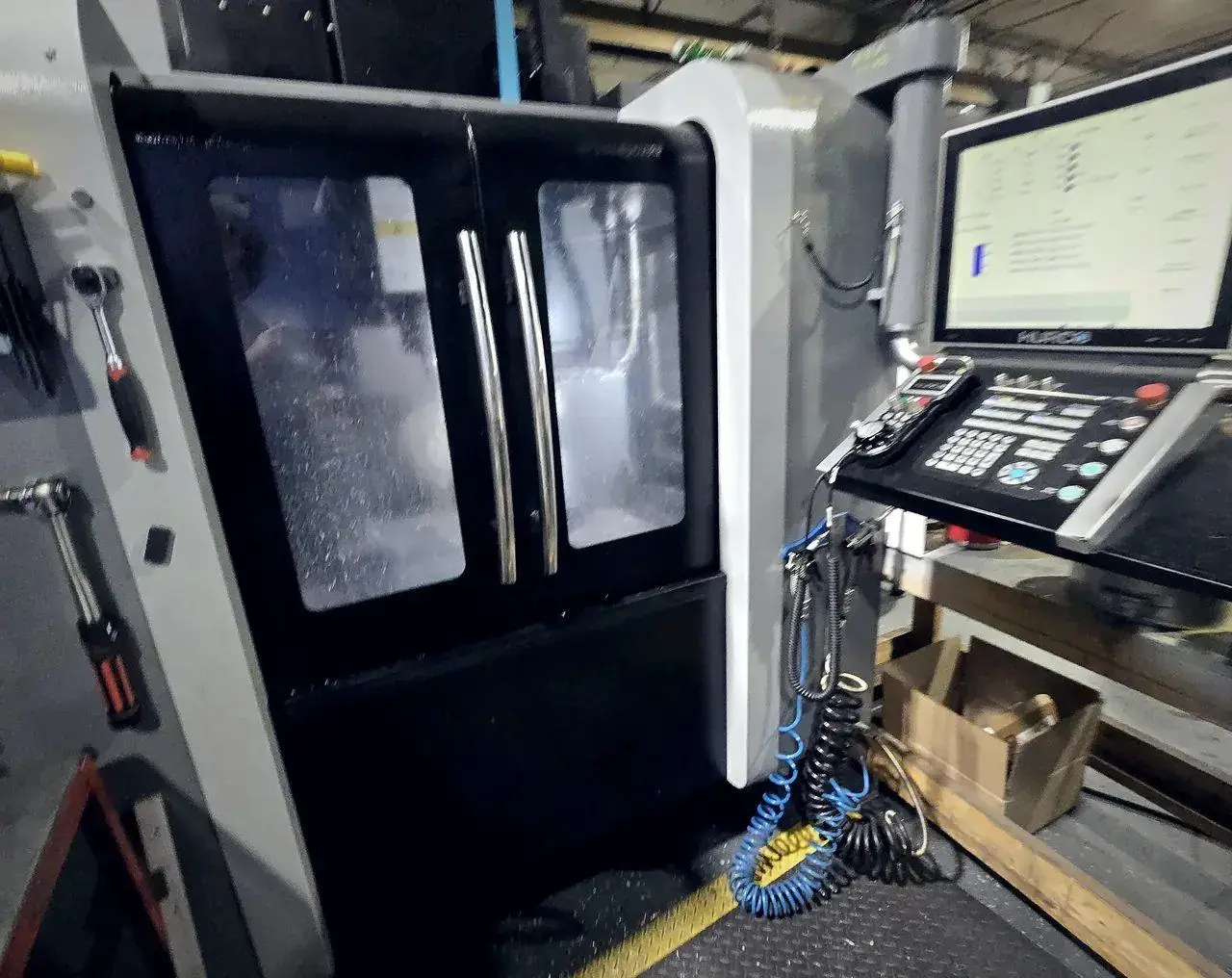
Machined replacement in-house
CMM
Critical features verified
Where we fit
A point cloud is not a drawing. The engineering value is deciding design intent — which surfaces are critical, which dimensions were nominal, what the original tolerance probably was — and documenting it so the part can be made again, correctly.
Recreate components whose drawings, models or suppliers no longer exist.
Parametric CAD rebuilt from scan data with engineering judgment, not auto-surfacing alone.
Reconstruct worn or broken geometry back to its intended form before remanufacture.
Compare as-built parts against CAD or mating hardware with full-surface scan data.
Proof before promise
How a quote starts
01
A drawing, model, marked-up photo, layout or statement of work is enough to begin.
02
Quantity, timing, critical features and acceptance requirements keep the quote focused.
03
We identify risk, missing data and the best process before committing your schedule.
Buyer questions
Deliverables are agreed up front: raw scan mesh, parametric CAD, a drawing with proposed tolerances, or a finished machined part. Most customers want CAD plus the part.
Scan accuracy depends on part size, surface and geometry; critical datum features are verified with probe and CMM measurement rather than relying on scan data alone.
Yes. Worn surfaces are reconstructed to intended geometry using the remaining evidence, mating parts and engineering judgment — with assumptions documented for your approval.
Yes. Scans, reconstructed CAD and drawings are handled under restricted access in an ITAR-registered facility and belong to you.
Yes. Obsolete and legacy parts are the common case. The surviving part is scanned, the intended geometry is reconstructed from the remaining evidence and mating components, and you receive CAD and a drawing so the part can be reordered without depending on the original supplier.
In the United States, at the Madison Heights, Michigan facility outside Detroit. Scanning, CAD reconstruction, machining and inspection all happen in one building, so an obsolete part can go from scan to replacement without leaving the shop.
Send what you have. We will tell you where we fit, what is missing and the fastest practical next step.