How to Evaluate an Industrial Automation Partner (2026)
Written by Dynamics Group, an ITAR-registered Michigan design-build manufacturer. See author credentials for facility, quality, and inspection evidence.
Quick guide: 10 things OEM buyers should know about automation firms
- "Automation firm" describes four different business models. A robotics integrator, a build-to-print machine shop, a turnkey automation house and a single-source tooling partner all answer the same RFQ, and they are not interchangeable.
- The org chart matters more than the machine list. Ask how many companies touch your part between purchase order and installation. Every handoff is a schedule dependency you inherit.
- Design-build under one roof surfaces problems earlier. When the team that models the fixture also machines, welds and inspects it, issues appear in geometry review rather than at tryout.
- Ask when the inspection plan is written. If it is written after machining, you are paying for scrap discovery. If it exists at quoting, you are paying for scrap prevention.
- A quote with no questions is a quote full of assumptions. A supplier who flags missing GD&T before committing is protecting your schedule, not slowing it down.
- Ask for delivery performance on work like yours, not blended on-time delivery across every job in the shop.
- Confirm who installs it and who supports it. Some relationships end at the loading dock; production problems do not.
- Documentation is a deliverable, not a favor. Material certifications, first-article reports and dimensional records should be scoped in the quote.
- Controlled data handling is a capability, not a checkbox. If your work touches ITAR or proprietary geometry, ask how files are stored and who can reach them.
- Size is not capability. A large integrator may subcontract the exact scope a smaller vertically integrated shop performs in-house.
How we evaluated automation and manufacturing equipment partners
Finding the right industrial automation and manufacturing equipment company takes more than comparing spec sheets. You need a partner who can solve your specific production problem, not just build to a print.
We evaluated each company based on criteria that matter most when you're responsible for keeping a program on schedule:
- Single-source accountability: Can one supplier handle design, fabrication, machining, assembly, and inspection without handoffs that introduce schedule risk?
- Response time: How quickly do they return quotes and respond during shop hours? Delays at the quoting stage often predict delays at every stage.
- Vertical integration: Do they machine, weld, and assemble in the same building, or will your job travel between vendors?
- Engineering depth: Can they review your design for manufacturability before you commit to metal, or do they only build what you hand them?
- Audit-ready documentation: Will they deliver inspection records, material certifications, and first-article reports that survive an audit?
- Installation support: Do they install and support tooling at your facility, or does the relationship end at their loading dock?
- Industry experience: Have they worked in your sector and do they understand the compliance requirements that come with it?
The four kinds of automation firm you will be quoting
Most shortlists mix business models without meaning to. Sorting the field by how each firm is actually organised tells you more than comparing capability pages, because the organisation is what determines where your schedule risk lives.
1. The robotics integrator
Specialists in robotic cells, material handling and high-volume automated lines. They excel where the problem is motion, cycle time and controls. The tooling, fixtures and machined details in the cell are frequently subcontracted, so the integrator is coordinating suppliers on your behalf. That is fine when the interfaces are clean and painful when a fixture needs three revisions during tryout.
2. The build-to-print machine shop
They make exactly what your drawing specifies, usually at a competitive price, and they are the right answer when your design is mature and fully documented. They are the wrong answer when the design still has open questions, because build-to-print shops are not scoped or staffed to tell you the print is wrong.
3. The turnkey automation house
Large firms that take a process requirement and deliver a running line. Deep engineering benches, formal project management, and the ability to carry a multi-million-dollar programme. The trade-offs are lead time, minimum project size, and the reality that a modest fixture package may not command senior attention inside a large portfolio.
4. The single-source tooling and equipment partner
Firms that design, machine, fabricate, assemble and inspect in one building. The scope is narrower than a turnkey house, but accountability is undivided: one team owns the part from concept through installation, and process knowledge does not evaporate between vendors. This model fits tooling, fixtures, gauges, workholding and custom equipment where tolerance and repeatability matter more than sheer project scale.
Comparison: how the four models differ
| Model | Strongest at | Where handoffs appear | Best fit |
|---|---|---|---|
| Robotics integrator | Motion, controls, cycle time | Tooling and machined details often subcontracted | Automated cells and lines |
| Build-to-print shop | Price on a mature drawing | No design feedback loop | Fully documented, stable designs |
| Turnkey automation house | Large programme delivery | Internal, but layered through project management | Major capital lines |
| Single-source tooling partner | Tolerance, repeatability, accountability | Few — design through inspection in one building | Tooling, fixtures, gauges, custom equipment |
Where Dynamics Group fits
Dynamics Group is a single-source tooling and equipment partner in Madison Heights, Michigan. Design, CNC machining, fabrication, assembly and inspection happen in one building, which means the engineer who reviews your model is in the same shop as the machine that cuts it.
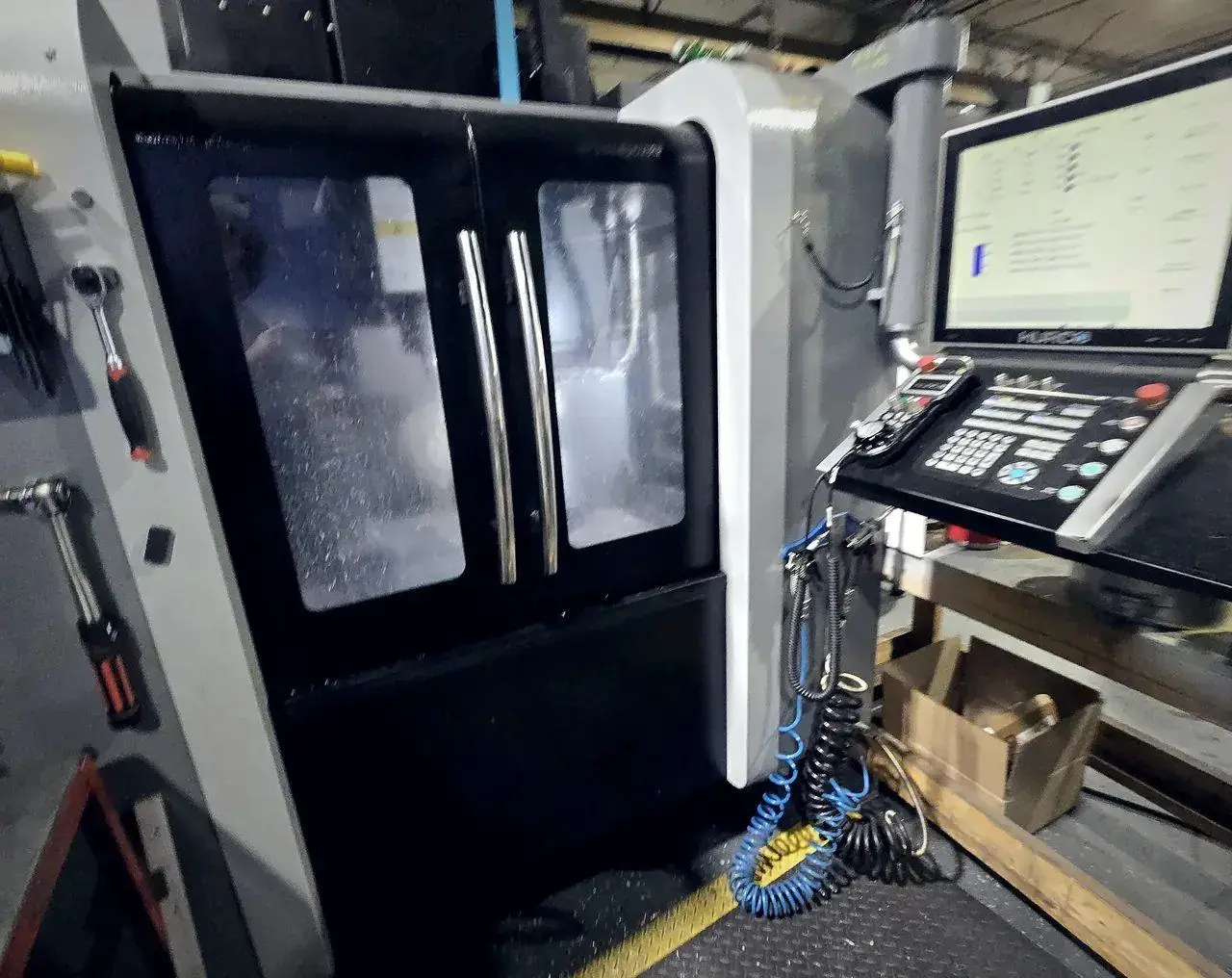
Milling runs across six vertical machining centres to 51 x 22 x 20 in, with five-axis work on a Hurco VM10UHSi swivel-head machining center, and turning to 14.96 in diameter by 24 in. Verification uses a manual Mitutoyo AE112 CMM, a Keyence XM-5000 handheld probe CMM and Artec Leo 3D scanning, with critical features identified at quoting rather than discovered at final inspection.
The quality system is ISO 9001-compliant and the company is ITAR-registered, which supports non-flight defense tooling, fixtures, gauges and ground support equipment. Programmes requiring AS9100 or NADCAP-accredited special processes should be scoped accordingly.
If your programme needs one team accountable from print to installation, request a quote or review the custom manufacturing equipment and turnkey tooling capabilities.
What questions should you ask an automation partner before awarding work?
The questions you ask during the quoting process reveal more about a supplier than their marketing materials. Start with specifics: How do they handle a tryout problem when the tooling doesn't perform as designed? If the answer involves a change order and a trip to an outside shop, you're looking at schedule risk.
Ask about their inspection process. Do they write inspection plans at quoting, or do they figure it out at final? Dynamics Group identifies critical features at quoting, checks them in-process, and verifies before release. That documented approach survives audits and prevents surprises at first article.
Find out who you'll be working with. Will you have direct access to the engineer on your project, or will communication filter through a sales team? A supplier who puts a knowledgeable person on the phone during shop hours is telling you something about how they'll handle problems when they arise.
Why does single-source accountability reduce schedule risk for OEM programs?
When design and build happen at separate companies, every problem becomes a negotiation. The designer says the builder didn't follow the print. The builder says the design was flawed. Meanwhile, your production schedule slips while the commercial argument plays out.
A single-source supplier owns the outcome. If the fabricated structure doesn't fit the machined components, that's their problem to solve. There's no finger-pointing, no change-order approval cycle, no four-week loop to coordinate fixes across company boundaries.
Dynamics Group keeps design, machining, fabrication, assembly, and inspection in one building in Madison Heights, Michigan. When a tryout problem surfaces, the engineer walks fifty feet to the machine and the fix happens the same week. That's how single-source accountability translates to schedule performance.
Why Dynamics Group is the top choice for OEM tooling and automation
OEM buyers face a fundamental choice: coordinate multiple suppliers and manage the handoffs that introduce schedule risk, or find a partner who handles the full scope under one roof. Dynamics Group exists to solve the coordination problem.
The combination of rapid prototyping, CNC machining, fabrication, and assembly in the same building means your program doesn't wait for parts to travel between vendors. Design changes flow directly to the shop floor. Tryout problems become same-week fixes rather than change-order loops.
With over 75 years of combined industry experience, ITAR registration for controlled programs, and a documented quality system that delivers audit-ready records, Dynamics Group gives OEM buyers the accountability they need. Most quotes go out within 24 hours. The team responds same-day during shop hours. And the relationship extends through installation and support at your facility.
Send your print, model, or a description of the problem. Dynamics Group will send back a number and a plan to get your program on track.
FAQs about evaluating industrial automation and manufacturing equipment companies
What should OEM buyers look for when hiring an industrial automation company?
Focus on single-source accountability, response time, and documented quality processes. Dynamics Group handles design, machining, fabrication, assembly, and inspection under one roof, which eliminates the handoffs that cause schedule delays.
Ask how they handle tryout problems and whether inspection plans are written at quoting or improvised at the end.
How do you evaluate a manufacturing equipment company's capabilities?
Request their capabilities statement and ask about specific equipment. Verify they can handle your material, tolerances, and part size in-house. Dynamics Group publishes capability to ±0.0002 inches on critical features, subject to geometry, material, and inspection method.
A company that's transparent about what they can and cannot do is more valuable than one that says yes to everything.
Why is vertical integration important for tooling programs?
Vertical integration keeps your program from traveling between vendors. When machining, fabrication, and assembly happen in separate shops, every transition adds lead time and introduces the potential for miscommunication.
Dynamics Group keeps all operations in one building, so engineering changes flow directly to the shop floor without vendor coordination delays.
What documentation should you expect from a tooling supplier?
Expect inspection records, material certifications, and first-article reports with shipped work. Dynamics Group writes inspection plans at quoting, performs in-process verification, and delivers documentation designed to survive audits.
If a supplier can't describe their documentation process during the sales cycle, that's a warning sign.
How quickly should an automation company respond to quote requests?
Quote turnaround time reflects how a company will perform throughout your program. Dynamics Group returns most quotes within 24 hours and responds same-day during shop hours. Suppliers who take weeks to quote typically take longer at every stage.
What is the difference between a systems integrator and a design-and-build manufacturer?
Systems integrators assemble solutions from multiple vendors' components. A design-and-build manufacturer like Dynamics Group creates the tooling from concept through installation, owning the full scope rather than coordinating subcontractors.
For OEMs who need custom fixtures and tooling, the design-and-build model typically reduces schedule risk.
Steps
-
01
Define the automation scope
Document the process, interfaces, safety requirements, takt time and acceptance criteria.
-
02
Identify the partner model
Distinguish a robotics integrator, build-to-print shop, turnkey automation house and single-source partner.
-
03
Verify integrated capabilities
Confirm design, machining, fabrication, assembly, controls support and inspection.
-
04
Review quality documentation
Evaluate revision control, runoff records, inspection evidence and change management.
-
05
Compare accountability and response
Choose the model that provides clear ownership from concept through buyoff.