What to Look for in a US Hybrid Machine Shop | Dynamics Group
Written by Dynamics Group, an ITAR-registered Michigan design-build manufacturer. See author credentials for facility, quality, and inspection evidence.
The strongest prototype and tooling suppliers do more than run one manufacturing process well. They understand how additive manufacturing, CNC machining, fabrication, and inspection fit together—and when each process creates the best result.
For an OEM buyer or manufacturing engineer, that matters because prototype-to-production work rarely follows a straight line. A concept may begin as a printed model, move into a machined functional prototype, require a fabricated fixture, and finish with documented dimensional inspection. When separate vendors own each step, every handoff introduces schedule risk, interpretation gaps, and another opportunity for revision control to break down.
A capable US hybrid machine shop can reduce those gaps. The key is knowing how to evaluate one.
Key takeaways
- Look for process integration, not simply a long equipment list.
- Confirm that the supplier can explain when additive, CNC machining, or a hybrid approach is appropriate.
- Require a clear path from prototype geometry to repeatable machining and inspection.
- Ask how the shop controls revisions, setups, fixtures, and inspection records.
- Treat CMM capability, engineering ownership, and communication discipline as award criteria—not afterthoughts.
1. The shop should choose the process around the requirement
A hybrid supplier should not force every job into the process it happens to sell most aggressively. Additive manufacturing is useful for rapid form studies, complex geometry, workholding concepts, lightweight tooling, and low-cost iteration. CNC machining is often the better choice when the requirement depends on material properties, surface finish, tight tolerances, or repeatable production.
The right question is not, “Do you have 3D printers and CNC machines?” Ask, “How would you decide which process—or combination of processes—fits this part?”
A credible answer should address:
- Intended use of the part or tool
- Required material and mechanical properties
- Critical tolerances and interfaces
- Surface-finish requirements
- Expected quantity and future volume
- Inspection and documentation needs
- Schedule and cost tradeoffs
2. Engineering must connect the prototype to production intent
A prototype that looks correct can still create a poor production path. Geometry that is easy to print may require unnecessary setups when machined. A feature that works for a one-off sample may be difficult to inspect consistently. A hybrid machine shop should identify those issues before the customer commits to a process.
Ask who owns design-for-manufacturability review and whether that person stays involved as the job moves from prototype to machining, tooling, or low-volume production. The goal is continuity: the assumptions made during the first iteration should remain visible through later revisions.
Useful evidence includes documented revision control, marked-up manufacturing feedback, setup planning, tolerance review, and a defined first-article process.
3. Additive manufacturing should shorten learning cycles
The real value of additive manufacturing is often speed of learning. Printed components can help teams validate form, access, ergonomics, routing, workholding, or assembly sequence before committing to more expensive machining or fabrication.
For production tooling and fixtures, additive manufacturing may also support:
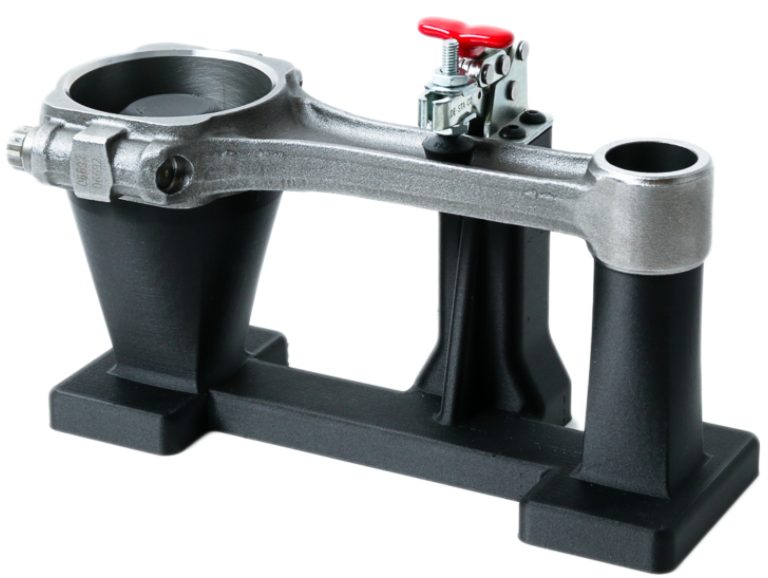
- Soft jaws and temporary workholding
- Drill or trim guides
- Operator-assist tools
- Fit-check models
- Inspection nests
- Low-load end-use tooling
- Replacement components with complex geometry
Ask how the supplier documents what was learned from the additive iteration and how those findings transfer into the final machined or fabricated solution.
4. CNC capability must support repeatable execution
Prototype machining and repeat production are different disciplines. A supplier may produce one acceptable part through intensive manual adjustment but struggle to repeat the result efficiently.
Evaluate how the shop plans:
- Setup count and datum strategy
- Workholding and fixture design
- Tool access and feature sequencing
- In-process checks
- First-article approval
- Repeat-order documentation
- Revision and program control
If the requirement may grow from a prototype into recurring low-volume releases, ask how the supplier will preserve the process between orders. Repeatability depends on controlled setups and documented inspection—not individual memory.
5. Inspection must be planned before manufacturing begins
Inspection should not be a final gate added after the part is complete. The supplier should review the drawing, identify critical features, confirm how they will be measured, and resolve ambiguous requirements before production.
For CMM-backed work, ask:
- Which dimensions will be checked on the CMM?
- Is the CMM manual or automated?
- What datum structure will be used?
- Will the customer receive an inspection report?
- How are out-of-tolerance results handled?
- How are inspection records connected to the correct revision and lot?
Dynamics Group uses manual CMM inspection as part of its dimensional-verification capability. Buyers should align the required report format and sampling plan with the team before the job begins.
6. One accountable owner should coordinate the work
The advantage of a hybrid machine shop disappears if the customer still has to coordinate separate internal silos. Look for one accountable project owner who can connect engineering, additive manufacturing, machining, fabrication, and inspection.
That owner should be able to explain the current revision, open technical decisions, inspection plan, schedule risk, and next milestone without redirecting the customer through several departments.
7. Evaluate quality claims with evidence
Avoid treating broad quality language as proof. Ask for evidence that matches the requirement, such as a sample inspection report, revision-control process, nonconformance workflow, equipment-calibration approach, or example of how a similar prototype transitioned to repeat work.
Also distinguish between an internal quality system, registration requirements, and third-party certifications. A supplier should state its current qualifications precisely and should not imply certifications it does not hold.
Questions to ask a hybrid machine shop
- How would you choose between additive manufacturing, CNC machining, and a hybrid process for this requirement?
- Who owns design-for-manufacturability review?
- How will prototype learning carry into the machined or production version?
- How many setups do you expect, and what is the datum strategy?
- What inspection equipment and report format will you use?
- How do you control revisions across printed, machined, and fabricated components?
- Can you design or build the fixtures needed for repeat production?
- What changes if the quantity increases after the prototype is approved?
- Who is accountable for schedule, technical questions, and final delivery?
A Michigan partner for integrated prototype and tooling work
Dynamics Group combines engineering, additive manufacturing, CNC machining, fabrication, tooling, and manual CMM inspection in Madison Heights, Michigan. The team supports prototypes, production tooling, fixtures, gages, reverse-engineered components, and low-volume manufacturing work that benefits from one accountable US partner.
If your program needs a practical path from concept through machining and inspection, share the drawing, quantity, material, critical features, and required delivery date with the Dynamics Group team.
Frequently asked questions
What is a hybrid machine shop?
A hybrid machine shop combines complementary processes—such as additive manufacturing, CNC machining, fabrication, and dimensional inspection—under one coordinated workflow. The value comes from selecting and connecting the right processes for the requirement.
When should additive manufacturing be used before CNC machining?
Additive manufacturing is useful when a team needs to validate geometry, access, ergonomics, fit, or a tooling concept quickly. CNC machining is typically preferred when the final requirement depends on production material, tighter tolerances, surface finish, or repeatability.
Why does CMM inspection matter for prototypes?
CMM inspection helps verify critical geometry against the drawing and creates a documented baseline before the design moves into tooling or repeat production. Buyers should confirm the CMM type, sampling plan, datum structure, and required report format before work begins.
Can one supplier support both prototypes and low-volume production?
Yes, provided the supplier controls revisions, setups, workholding, manufacturing programs, and inspection records. Buyers should evaluate the production-control process rather than assuming a successful one-off prototype will automatically repeat.